Did you know?

The word algorithm comes from the name Al-Khwarizmi, a 9th-century Muslim mathematician whose work laid the foundation for modern computing and AI logic.

Did you know?

The first recorded programmable robot was described by Al-Jazari in the 12th century — centuries before modern robotics. His designs inspired the automation we see today.

Did you know?

Avicenna (Ibn Sina) wrote *The Canon of Medicine*, a medical encyclopedia that shaped healthcare education in Europe and the Middle East for over 500 years.

Allah says in the Quran

"And We send down water from the sky and make every generous species grow in it."

Surah Luqman (31:10)
Innovation Driving the Future

Who  We Are

At TexAM University at Dallas, we are shaping a future driven by cutting-edge science, advanced technology, and forward-thinking solutions. Our focus lies in building leaders equipped with practical skills, innovative ideas, and a strong ethical foundation. With specialized programs in Artificial Intelligence, Robotics, Engineering, and Data Analytics, TexAM prepares students to excel in today’s rapidly evolving technological landscape. Rooted in integrity and collaboration, we inspire individuals to contribute meaningfully to global advancements.
img
Our Vision
To lead the way in technological innovation while fostering ethical leadership, empowering students to tackle modern challenges and shape a sustainable, progressive future.
img
Our Mission
To deliver world-class education in science and technology, guided by principles of integrity, excellence, and ethical responsibility, preparing students to make a global impact.
Engineering

Gain hands-on experience in problem-solving and innovation through advanced engineering disciplines. Our program prepares students to design solutions that shape the future of infrastructure, technology, and society.  

Artificial Intelligence & Data Analytics

Master the tools of tomorrow with a curriculum focused on AI, machine learning, and big data. Develop solutions for complex problems and drive meaningful progress in industries  

Business Management & Innovation

Build leadership and entrepreneurial skills with a strong foundation in business principles, strategy, and innovation. Learn to lead with purpose and drive change in dynamic global markets.

IT & Emerging Technologies

Prepare for the digital future with expertise in information technology, cloud systems, and emerging innovations. Our program ensures students are ready to meet evolving technological challenges.  

img

Innovative Curriculum

Innovative Curriculum

Our programs combine modern STEAM education with timeless Islamic values. Students engage in critical thinking, hands-on learning, and ethical development to excel in an ever-changing world.
img

Cutting-Edge Facilities

Cutting-Edge Facilities

From advanced labs to smart classrooms, TexAM provides state-of-the-art facilities. Our campus fosters innovation, enabling students to work with groundbreaking technology and modern resources.
img

Community-Focused Values

Community-Focused Values

We believe in building a strong, inclusive community where cultural heritage meets modern progress. Our students are nurtured to become leaders with a sense of purpose and responsibility.

img globack-back hard-box

Global Vision

TexAM University at Dallas is a gateway to the future, where global perspectives and local values unite. We prepare students to make meaningful contributions to their communities and the world.

Global Vision
TexAM University at Dallas, Texas   |   First University in the USA to offer STEM degree programs embedded with mandatory courses in Islamic Studies.

Ibn AL-Haytham

The Visionary Of Optics And Scientific Method

Ibn al-Haytham•s revolutionary work in optics changed how we understand light, lenses, and vision. His invention of the scientific method introduced a systematic way of thinking that still shapes science today. For over 1, years, his discoveries have advanced fields like photography, astronomy, and physics.

1,000+

Years
Optical
Advancement

10+

Centuries
Scientific
Method

Al-Khwarizmi

The Father of Algebra and Modern Algorithms

Al-Khwarizmi laid the foundation for modern mathematics, introducing algebra and shaping the digital world through algorithms. His legacy continues to influence technologies like search engines, artificial intelligence, and complex computations. For over 1,200 years, his work has empowered innovation and problem-solving worldwide.

1,200+

Years
Medical
Influance

10,000+

Algorithmic
Impact

Ibn Sina (Avicenna)

The Visionary of Optics and Scientific Method

Ibn Sina’s Canon of Medicine transformed healthcare practices and served as the standard textbook for over 1,000 years. His contributions to medicine, philosophy, and natural sciences have influenced generations of scholars. Ibn Sina’s 450+ works embody a lifetime dedicated to healing, discovery, and intellectual thought.

1,000+

Years
Medical
Advancement

450+

Scholarly
Contributions

Al-Khwarizmi

The Father of Algebra and Modern Algorithms

Al-Khwarizmi laid the foundation for modern mathematics, introducing algebra and shaping the digital world through algorithms. His legacy continues to influence technologies like search engines, artificial intelligence, and complex computations. For over 1,200 years, his work has empowered innovation and problem-solving worldwide.

1,200+

Years
Medical
Influance

10,000+

Systems
Algorithmic
Impact

img
Slider Image

Mr. Shahid A. Bajwa

Chairman, Board of Trustees, TexAM University

Mr. Shahid A. Bajwa is a dedicated leader with extensive experience in humanitarian work and community development. He has served as the Regional Director at ICNA Relief USA, where he played a pivotal role in overseeing disaster relief efforts and social services across multiple states.

His commitment to serving humanity is further exemplified by his involvement with USAID, where he contributed to various development projects aimed at improving lives in underserved communities. Br. Bajwa’s leadership and dedication have significantly impacted the communities he has served, reflecting his unwavering commitment to humanitarian causes.

Slider Image

Dr. Ghulam M. Chaudhry

President of TexAM University at Dallas

A distinguished academic and leader, Dr. Ghulam M. Chaudhry has made remarkable contributions to the fields of computer science and electrical engineering. With a career spanning decades, he has served as a Professor and Chair at the University of Missouri–Kansas City (UMKC),

where he specialized in computer architectures, parallel and distributed systems, and VLSI design. His dedication to advancing technological education and research has inspired countless students and professionals, leaving a lasting impact on the academic community.

Nobel Prize in Chemistry, 1999

Dr. Zewail, an Egyptian-American scientist, was awarded the Nobel Prize for his pioneering work on femtochemistry, which studies chemical reactions on extremely short timescales. His research provided deeper insights into chemical processes, influencing advancements in chemistry and related fields.

Dr. Ahmed Zewail (1946–2016)

Nobel Prize in Chemistry, 2015

A Turkish-American biochemist, Dr. Sancar was honored for his mechanistic studies of DNA repair, explaining how cells repair damaged DNA and maintain genetic information. His work has significant implications for cancer research and treatment.

Dr. Aziz Sancar (b. 1946)

First Muslim Woman in Space

An Iranian-American engineer and entrepreneur, Dr. Ansari became the first Muslim woman to travel to space in 2006, visiting the International Space Station as a self-funded space tourist. Her journey has inspired many in the Muslim world and beyond to pursue careers in STEM fields.

Dr. Anousheh Ansari (b. 1966)

Discrete Cosine Transform, 1970s

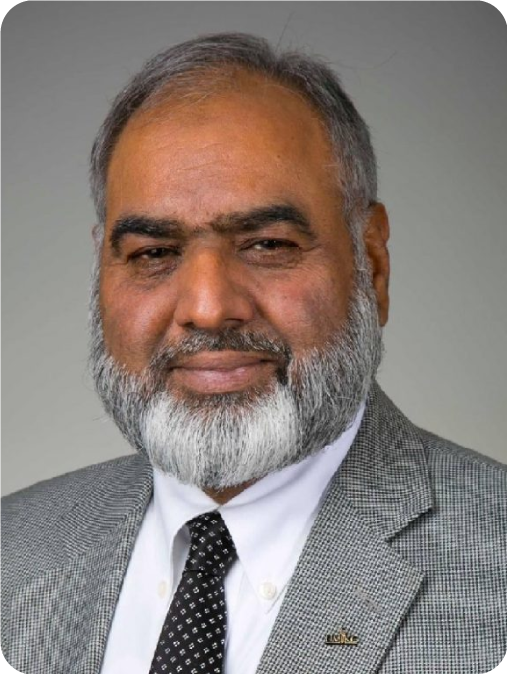
Dr. Nasir Ahmed, a Pakistani-American electrical engineer, invented the Discrete Cosine Transform (DCT) in the early 1970s. It’s the core algorithm that makes JPEG, MPEG, and many image/video compression standards possible, helping digital images and videos be stored and transmitted efficiently.

Dr. Nasir Ahmed (b. 1940)

Leading COVID-19 Vaccine Effort, 2020

Dr. Moncef Mohamed Slaoui, a Moroccan-born Belgian-American immunologist, led Operation Warp Speed — the U.S. project to accelerate vaccine development for COVID-19. He had worked in vaccine R&D for decades at GlaxoSmithKline, contributing to many vaccine programs before heading the national vaccine strategy.

Dr. Moncef Mohamed Slaoui (b. 1959)

Nanomedicine & Targeted Drug Delivery

Dr. Ghada Al-Mutairi, a Saudi-American professor and researcher, developed a nano-capsule system that can target inflammation inside the body and deliver drugs precisely using laser activation. Her innovation has advanced eye treatments and therapies for rheumatoid diseases, with potential for broader medical applications.

Dr. Ghada Al-Mutairi (active researcher)

Renowned Structural Engineer

Known as the father of tubular designs for high-rise buildings, Dr. Khan's innovations include the design of the Sears Tower (now Willis Tower) and the John Hancock Center in Chicago. His work revolutionized skyscraper construction, allowing for taller and more efficient structures.

Dr. Fazlur Rahman Khan (1929–1982)

Neurosurgeon & Medical Inventor

Dr. Ommaya invented the Ommaya reservoir, a system used to deliver chemotherapy directly to the cerebrospinal fluid, improving treatment for brain tumors. His invention has been instrumental in treating central nervous system diseases, enhancing patient care.

Dr. Ayub Ommaya (1930–2008)

Nobel Prize in Physics, 1979

A Pakistani theoretical physicist, Dr. Abdus Salam was awarded the Nobel Prize for his contribution to the electroweak unification theory, which explains the relationship between electromagnetic and weak nuclear forces. He was the first Muslim to win a Nobel Prize in science and a strong advocate for science education in the Muslim world.

Dr. Abdus Salam (1926–1996)

Pioneer of Algebra, 9th Century

An Iraqi mathematician and astronomer, Al-Khwarizmi introduced the fundamental principles of algebra, a term derived from his book “Al-Kitab al-Mukhtasar fi Hisab al-Jabr wal-Muqabala.” His work laid the mathematical foundation for modern computing and algorithmic logic.

Muhammad ibn Musa al-Khwarizmi (c. 780–850 CE)

Father of Optics, 11th Century

An Arab scientist from present-day Iraq, Ibn al-Haytham made groundbreaking discoveries in optics, visual perception, and experimental physics. His *Book of Optics* transformed understanding of light and vision, influencing Renaissance science centuries later.

Hasan ibn al-Haytham (Alhazen) (c. 965–1040 CE)

Pioneer of Surgery, 10th Century

A Muslim physician from Andalusia (modern Spain), Al-Zahrawi wrote the *Kitab al-Tasrif*, a 30-volume encyclopedia that described surgical instruments and procedures still relevant today. He’s often called the “Father of Modern Surgery.”

Abu al-Qasim al-Zahrawi (Albucasis) (936–1013 CE)

Agriculture Technology

TexAM University at Dallas is at the forefront of revolutionizing agriculture with cutting-edge technology. By integrating robotics, AI, and precision tools, we enable students to develop innovative solutions that increase productivity, optimize resource management, and drive sustainable farming practices. Future leaders here are trained to address food security challenges with science and ingenuity.

Robotic Technology

Innovation thrives in TexAM’s Robotics programs, where students design and build advanced robotics systems to solve real-world problems. From automation in industries to the development of humanoid robots, we prepare pioneers to lead advancements in robotics, AI, and machine learning. Explore your potential in shaping the technological landscape of tomorrow.

What Programs Does TexAM University at Dallas Offer?
At TexAM University at Dallas, we provide a unique blend of STEAM (Science, Technology, Engineering, Arts, and Mathematics) programs integrated with Islamic studies. Our offerings include associate, bachelor’s, and master’s degrees across disciplines like IT, Engineering, Business Management, and more.
How Can I Apply to TexAM University at Dallas?
Our application process is simple and straightforward. Choose your program, review admission requirements, and submit your application through our online portal. Detailed guidance is available in the "How to Apply" section on our website.
Does TexAM University at Dallas Offer Scholarships?
Yes, we are committed to making education accessible. TexAM University at Dallas offers a variety of scholarships and financial aid programs to help students achieve their academic goals. Check our "Scholarships and Financial Aid" page for eligibility and application details.
What Makes TexAM University at Dallas Unique?
TexAM University at Dallas stands out for its innovative integration of Islamic principles with modern STEAM education. We emphasize holistic growth, preparing students to excel academically, uphold ethical values, and make meaningful contributions to society.
Is the University Open to International Students?
Absolutely! TexAM University at Dallas welcomes students from around the globe. Our inclusive environment fosters cultural exchange, collaboration, and a truly global learning experience. International applicants can find all relevant details in our "International Admissions" section.
Who can apply or study at TexAM University?
TexAM University at Dallas is an equal opportunity university, open to people of all faiths, genders, races, and ethnicities.
Contact Us Now
Apply Now